
What’s New in R: August 24, 2026
Welcome to this week's edition of What's New in R! This week, we're featuring a new package for making chord diagrams the ggplot2 way, a gloriously unnecessary package that lets you play Doom in R, and a clever tool for searching the R ecosystem by what functions do rather than what packages are called. Let's dive in!
Chord diagrams in R with ggchord2
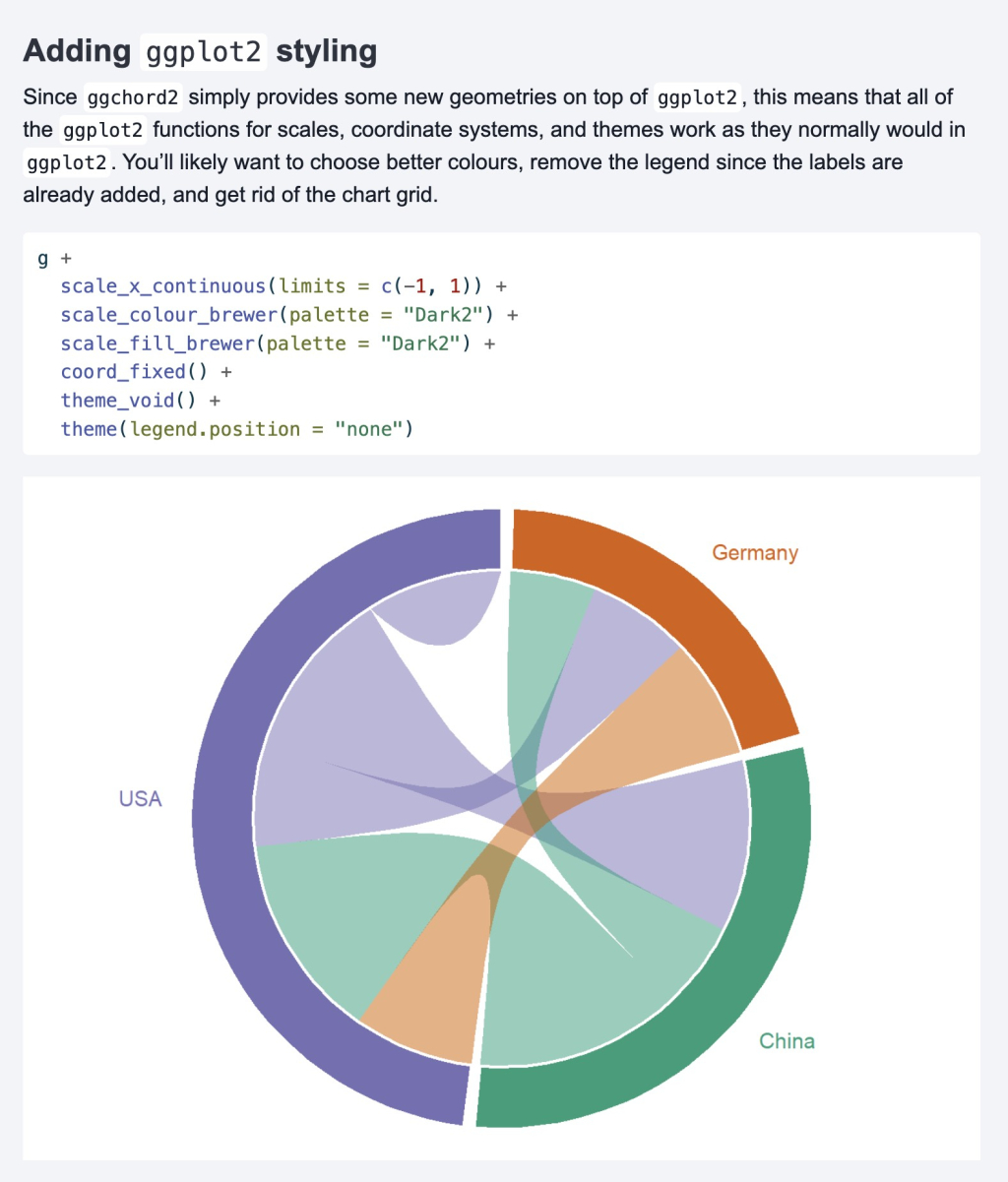
Nicola Rennie introduces {ggchord2}, a new {ggplot2} extension for drawing chord diagrams, which are a unique way to visualize the flows and relationships between different categories. She demonstrates it with a dataset of flows between countries (USA, China, and Germany), showing how it handles both bidirectional and asymmetric relationships. The real appeal is that because it's built on {ggplot2}, all the scales, themes, and other pieces you already know carry right over. If you've got connections or flows to show and want something a bit different from the usual charts, this is a great option.
rdoom
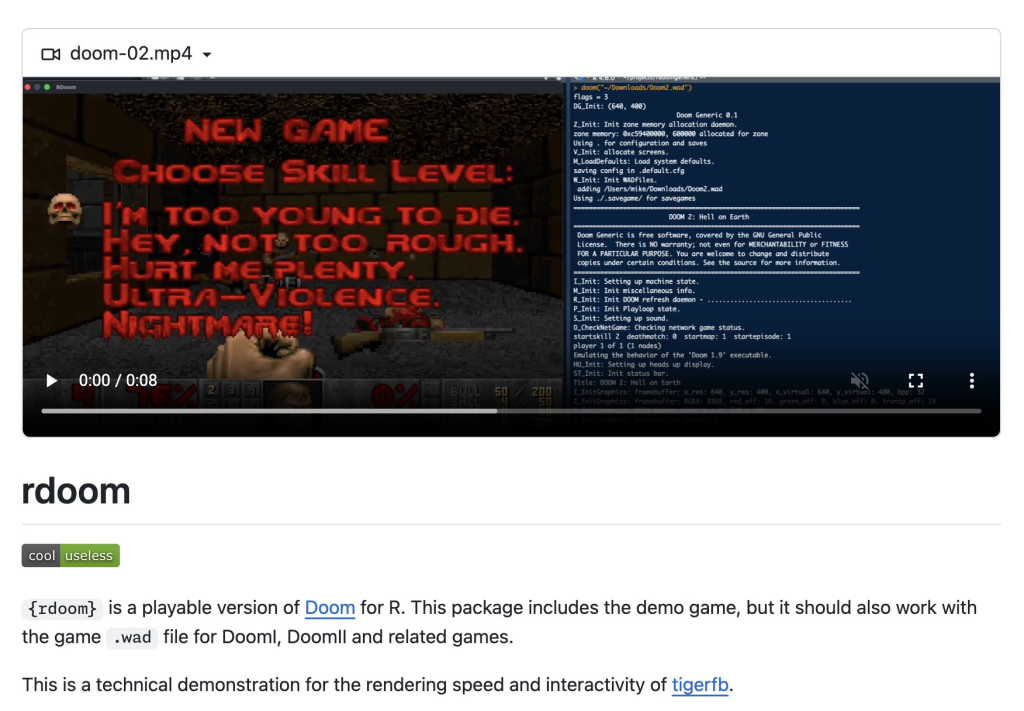
If you remember the classic video game Doom, you can now play it right inside R, thanks to {rdoom} from the aptly named coolbutuseless. It works by wiring the doomgeneric engine up to {tigerfb} (a cross-platform framebuffer for R) for graphics and input, with {nara} handling fast raster rendering and {audio} playing the sound effects. You can launch it with a simple command using the included demo WAD, or point it at your own Doom I or II files, and it supports both mouse and keyboard controls. Is it useful? Not really. Is it a delightful demonstration of what R can do? Absolutely.
Searching the R Ecosystem by Function, Not Package Name
Kylie Ainslie's The Warehouse tackles a genuinely useful problem: how do you find an R package when you know what you want to do but not what it's called? With more than 20,000 packages on CRAN alone, searching by keyword only helps if you already know the right term, so The Warehouse lets you search by functionality instead, aggregating packages from CRAN, GitHub, Bioconductor, and more. It uses Claude to expand your query into related concepts and a chatbot to help you compare packages and see code examples, with community features for submitting missing packages and writing reviews. Think of wanting to filter data: there's no package called filter, but plenty of functions can do it, and this is a smart way to surface them.
If you enjoyed this issue of What’s New In R, please share it with a friend! And if they want to get What’s New in R directly in their inbox, they can sign up on the R for the Rest of Us website.
Got any ideas for resources I should feature in future issues of What’s New in R? Leave a comment below!
Sign up for the newsletter
Get blog posts like this delivered straight to your inbox.



You need to be signed-in to comment on this post. Login.