
What’s New in R: August 3, 2026
Welcome to this week's edition of What's New in R! This week, we're featuring a practical guide to getting better R code out of your AI coding agent, a video on connecting R to the cloud, and an overview of agentic skills and how they can level up your work with agents. Let's dive in!
10 tips for getting better R code from your AI coding agent
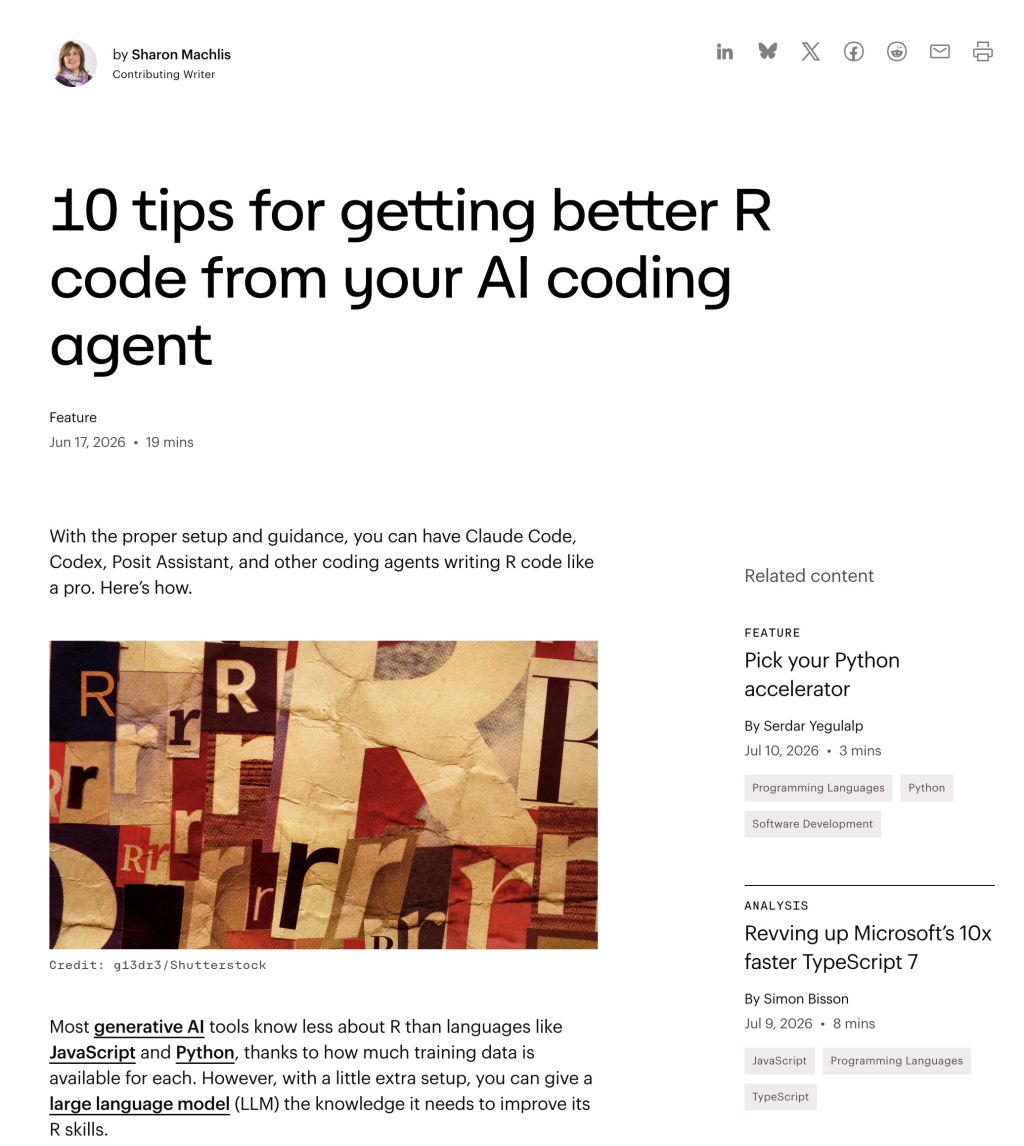
Sharon Machlis rounds up ten practical tips for getting better R code out of AI coding agents like Claude Code, Codex, and Posit Assistant. She covers things like reaching for a dedicated coding agent instead of a general chatbot, setting up knowledge files such as CLAUDE.md and AGENTS.md, using agent skills, pulling in your environment with the {btw} package, and leaning on plan mode before any code gets written. It's a nice getting-started guide if you want to work more effectively with agents. Even with imperfect models, a little setup and good prompting goes a long way.
R users avoid the cloud (until they see this)
In this video, Albert Rapp walks through working with the cloud from R, including cloud databases, cloud storage, and other tools that can make your R work smoother. If you've stuck to local files and been a little wary of moving things into the cloud, this is a great, approachable introduction to what's possible. Rapp is always good at making this kind of topic feel manageable rather than intimidating. Well worth a watch if you're ready to go beyond your own machine.
Agentic skills
Pingfan Hu offers a helpful overview of agentic skills: encapsulated workflows you build once and then invoke by name, so you're not re-explaining the same instructions to your agent every time. He walks through several patterns for building them, from a minimal single SKILL.md file up to more complex setups with templates, scripts, and even nested agents that hand specialized tasks off to other models. Skills can really improve your coding when you work with agents, and this is a clear look at how they actually work. If you've been curious about skills but weren't sure where to start, this is a great primer.
If you enjoyed this issue of What’s New In R, please share it with a friend! And if they want to get What’s New in R directly in their inbox, they can sign up on the R for the Rest of Us website.
Got any ideas for resources I should feature in future issues of What’s New in R? Leave a comment below!
Sign up for the newsletter
Get blog posts like this delivered straight to your inbox.



You need to be signed-in to comment on this post. Login.