
What’s New in R: September 21, 2026
Welcome to this week's edition of What's New in R! This week, we're featuring the Quarto 1.10 release and its improved accessibility checking, a package for making really interesting maps with simple syntax, and the highlights from Positron's August release. Let's dive in!
Quarto 1.10
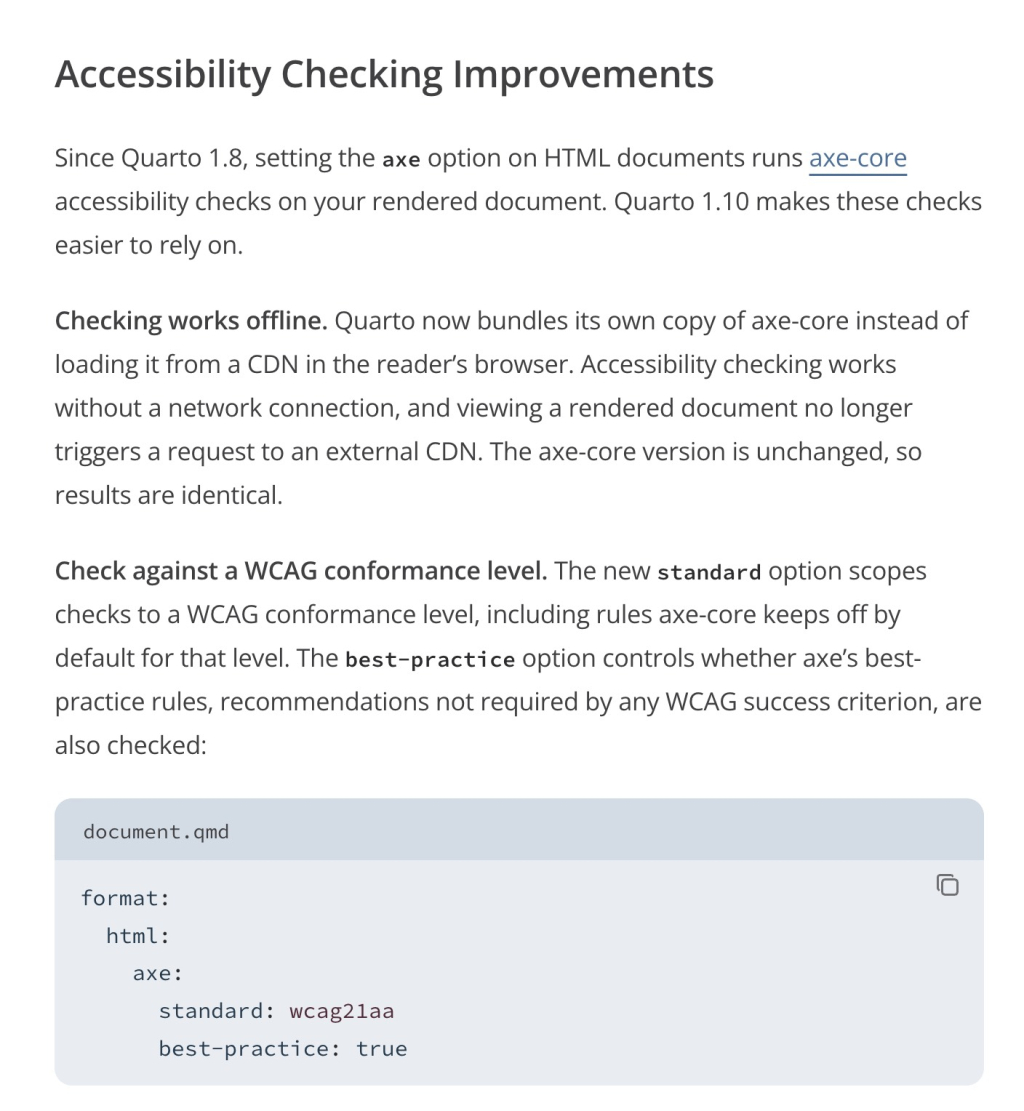
Charlotte Wickham walks through what's new in Quarto 1.10, which brings a number of smaller fixes along with one thing I really like: easier accessibility checking. The accessibility checker now works offline, lets you scope checks to specific WCAG conformance levels, and produces a report that prioritizes violations by impact. We have found that using Typst is fantastic for making accessible PDFs, and improvements like this help ensure your outputs are accessible in both PDF and HTML. The release also includes more stable previews, shortcodes that work inside math, and better font handling for PDF and Typst output.
geovizr
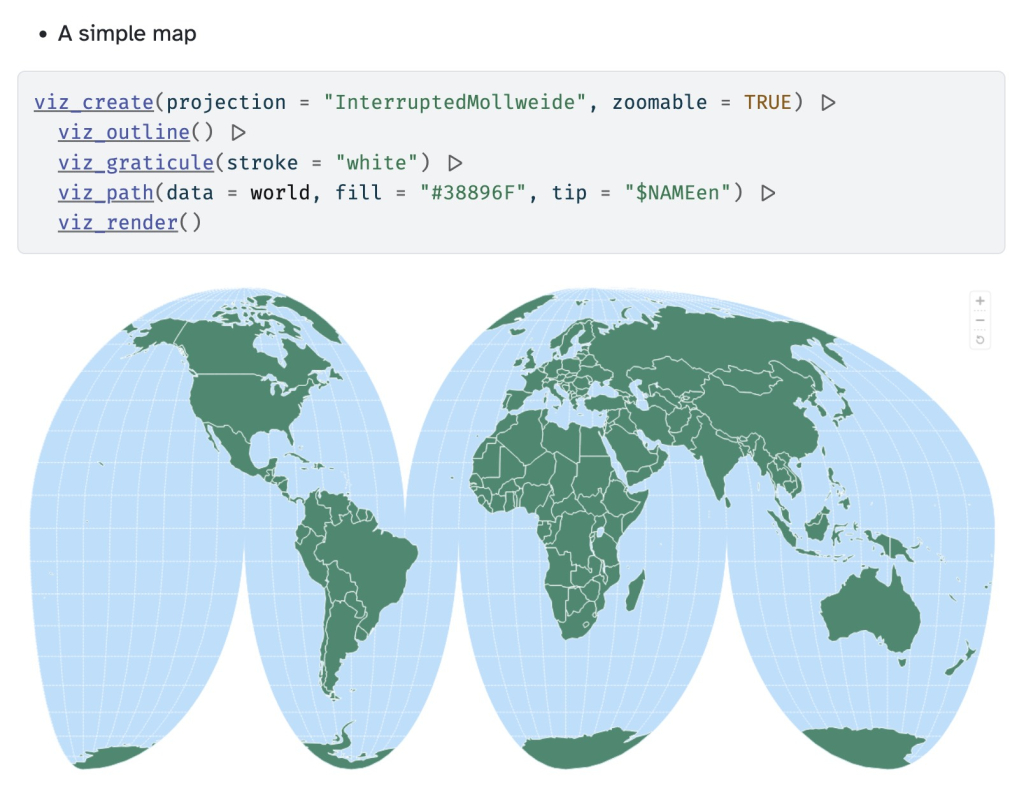
The {geovizr} package by Nicolas Lambert lets you make really interesting-looking maps with nice, simple syntax. It wraps the geoviz JavaScript library from the d3.js ecosystem, producing interactive, zoomable vector maps as well as static SVG maps, all from your {sf} objects. You build maps by piping together functions like viz_create(), viz_choro(), and viz_render(), with support for proportional symbols, choropleths, spikes, pictograms, and even Dorling cartograms. Rather than competing with {mapsf} or {tmap}, it focuses on interactive geovisualization for the web, and the results look great.
Positron August Release Highlights
Julia Silge rounds up what's new in Positron's August release, and the thing I like most is that Positron now notifies you when your code references packages you haven't installed, offering to install them with a single click. This is something RStudio has always done, but it hasn't existed in Positron until now, so it's great to see it arrive. The release also expands the Data Connections preview to support Amazon Redshift, Snowflake, and Databricks, polishes inline output in Quarto documents with new Fix and Explain buttons for errors, and speeds up startup. If you're using Positron (or Positron-curious), it's worth a read.
If you enjoyed this issue of What’s New In R, please share it with a friend! And if they want to get What’s New in R directly in their inbox, they can sign up on the R for the Rest of Us website.
Got any ideas for resources I should feature in future issues of What’s New in R? Leave a comment below!
Sign up for the newsletter
Get blog posts like this delivered straight to your inbox.



You need to be signed-in to comment on this post. Login.